I never served in the military. Go ahead and let that sink in for a second — because I want to earn the right to write this.
What I did do was spend years as an electrical engineer designing hardware systems fielded on ships, transport vehicles, and carried by soldiers as portable man-pack units. I sat across tables from officers and government officials, took notes on specifications and performance requirements, and nodded along to a lot of very important-sounding feedback. But the conversations that actually changed the way I worked? Those came from the soldiers themselves. They were the ones who had to use my equipment, and they had zero interest in sparing my feelings about it.
One design I was particularly proud of was a compact, battery-operated unit that connected to chemical, biological, and nuclear sensors and relayed detection data across fielded units in real time. I thought it was elegant. Efficient. A genuine contribution. Then I learned what happened to it in the field: the moment a soldier had to hump it around in a ruck and found that the extra weight and bulk were slowing down higher-priority objectives, my shiny new device got dropped on the nearest pile of rocks and left there.
That’s the kind of feedback you will never get from an officer in a conference room. But a soldier will tell you straight because their life may depend on the answer.
That conversation opened a door I’ve never fully closed. Over time, I began to understand just how much precision and discipline goes into things most civilians never think twice about. Take something as routine as loading into a transport vehicle. A well-trained squad isn’t thinking about the ride, they’re already planning the dismount because reacting to contact while exiting a vehicle is a critical and dangerous task. Every position, every sequence, every angle of exit gets rehearsed until it’s automatic. The chaos you see spilling roughshod out the back of a truck in an old action movie? That’s the version that gets people killed.
Land navigation carries that same weight of invisible complexity. It isn’t just reading a map. It’s maintaining a pace count, tracking azimuth, delegating to team members without losing situational awareness, identifying checkpoints and backstops, and establishing rally points, all while scanning your surroundings and adjusting for the fact that the plan almost never survives contact with real terrain. A patrol that can flex on the move, reassess a crossing point at a linear danger area, and shift formation without breaking cohesion isn’t improvising. They’re executing years of training under pressure. Most people will never see it, and that’s exactly the problem.
So much of what soldiers learn is invisible to the rest of the world, and what isn’t invisible is often misread. Those same leadership instincts, that adaptability and commitment under pressure, don’t come with a translation guide when a veteran walks into a job interview. My wife, Laura, is addressing this head-on. Her capstone project, presented as she finishes her degree, focuses on working with local companies in Ohio to help veterans bridge that gap. And the gap isn’t about capability. It’s about translation.
Consider what a veteran actually brings to the table. Leadership that was tested under conditions where the wrong call had real consequences: not a missed deadline, but a missed life. Teamwork built inside units where trust wasn’t a team-building exercise but a survival requirement, where you learned to rely on the person next to you because there was no other option. Adaptability forged in environments that changed faster than any plan could account for, where the ability to reassess and keep moving wasn’t a soft skill but a core function. Discipline that doesn’t clock out, because in the field, there is no clocking out. And a standard of commitment that most workplaces will never ask for and wouldn’t know how to measure if they did.
These aren’t resume bullet points. They are deeply wired behaviors earned through years of high-stakes repetition. The challenge isn’t that veterans lack what civilian employers are looking for. It’s that neither side always has the language to recognize it. Laura’s work is about building that bridge, giving veterans the framework to articulate what they’ve already mastered and giving employers the eyes to see what’s standing right in front of them. Sometimes the most capable people in the room are the ones who need someone to hold the door open.
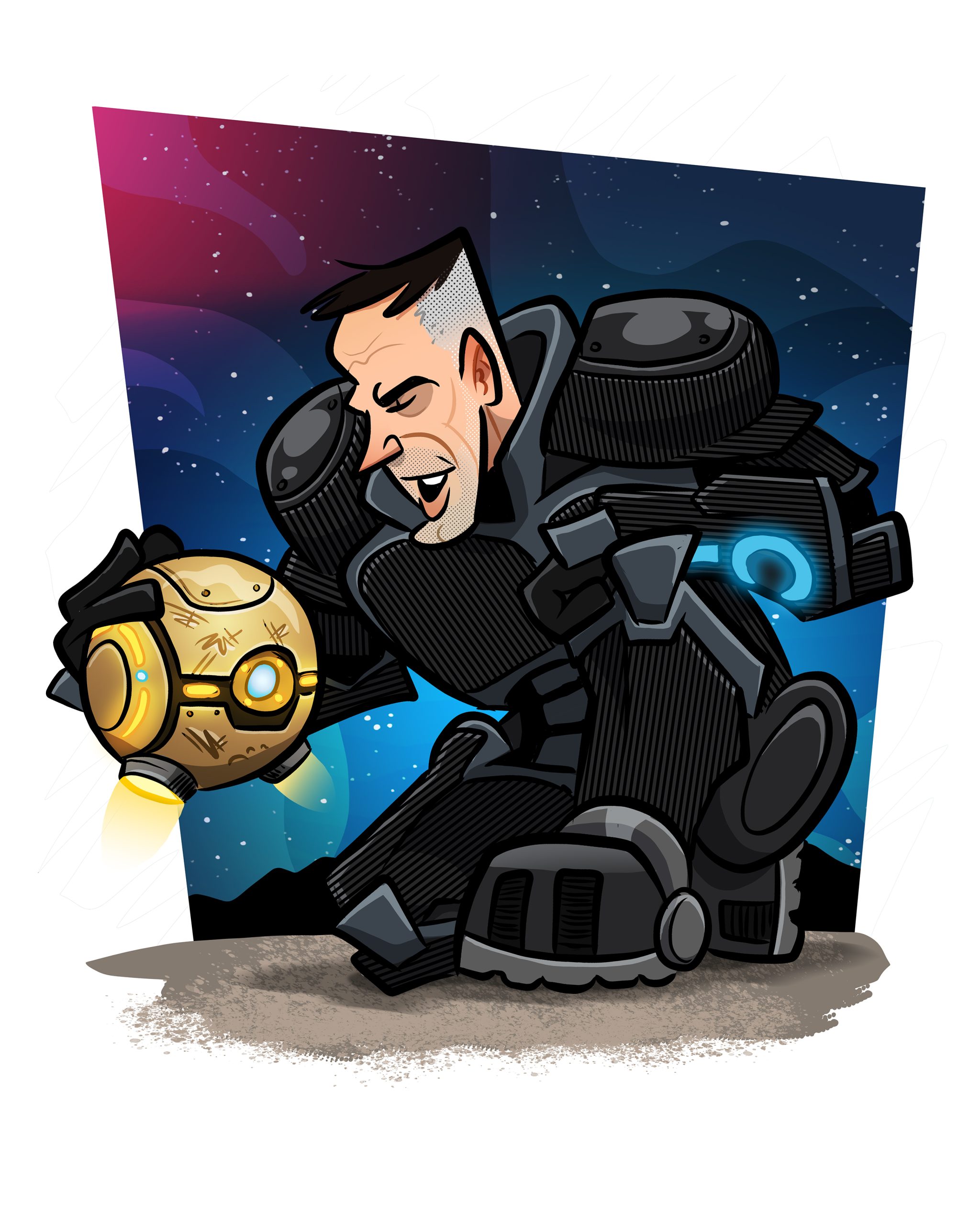
For me, one way of holding that door is through fiction. Tiberius Novak is what I think of as an every-soldier: not because he represents any single person, but because I’ve tried to build him from the ground up using what I’ve learned about how soldiers actually think, move, and operate. Squad formations, contingency planning, raid types, task organization — all of it shaped by real doctrine and real conversations with real people who knew what they were talking about. Not all of it made it into War Dogs: Pit Bull. But all of it made Tiberius more honest. And just like the soldiers who eventually hang up their gear and figure out what comes next, Tiberius has plans beyond the life he’s currently living. That tension, between who the mission made you and who you still want to become, felt like the most human thing I could give him.
To every veteran who ever took the time to tell me what I got wrong: thank you. You made everything better.

No responses yet